Choosing a class typically is more about its capabilities: what will it allow the character to do? What role can it help you fill such as damage dealer, healer, controller, protector, etc. Is it martial or spell-based? And so on. But when building your character, theorycrafting on why the character, versus the player, followed that path can play a large role in creating an interesting back story. Their Background and Species selections can help towards this, and having an idea of the subclass path they will follow can give you the most clarity, but there still can be different reasons for different characters. Some classes are more straightforward, like a Fighter or Cleric, while some are more open-ended like a Paladin or Warlock. In these Class Theory features we will explore and present concepts to help illustrate the reason a character follows a class path.
In this feature we will explore why a character might gain the ability to call on the mystical, primal forces of nature.
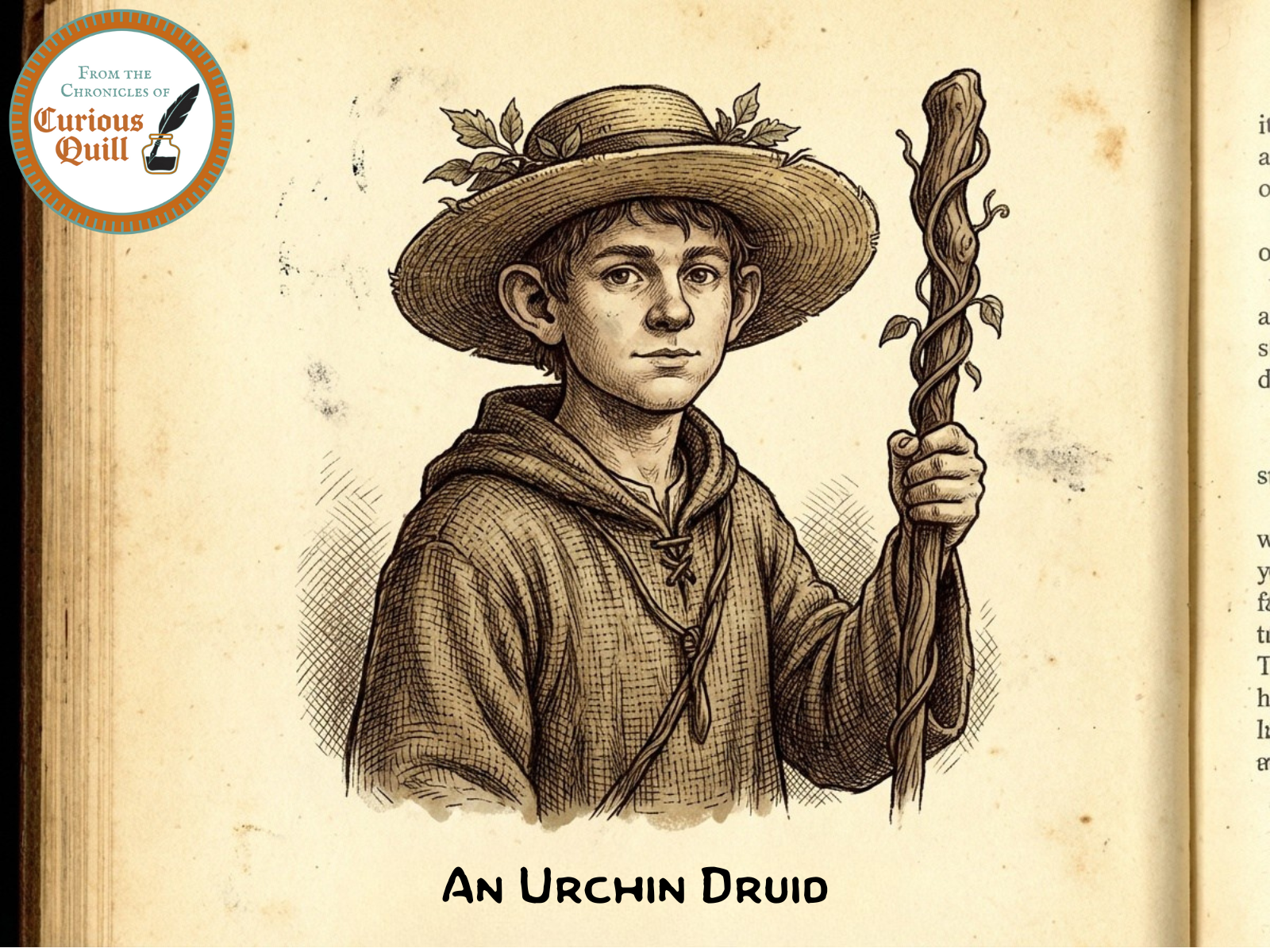
We just covered the Cleric class, and while Druids share a lot in common, they are unique enough to have their own traits and philosophy. Rangers, who we have yet to cover, are similar as well—being as martial defenders of nature. So what would make someone follow the path of a Druid, and why would they be granted the powers that separate them from the typical primal sprititualist who never gain the ability to cast spells?
The intro text for the Druid class says that they: “call on the forces of nature, harnessing magic to heal, transform into animals. and wield elemental destruction.” Healing is shared with other classes such as the Cleric and ‘elemental destruction’ is also the purview of Sorcerers and Wizards. The unique thing about Druids is their shapechange ability—called Wild Shape—but even that is more similar to than different from the Cleric’s and Paladin’s Channel Divinity once they Druid selects their subclass. Just as Channel Divinity has a default ability to turn undead which then branches out to different effects in the subclass, so too does Wild Shape have its default feature and then the subclass further expands it. (IMHO when they released 5e24, they should have renamed Wild Shape to something like Channel Primal or something.) They also share the 1st level choice of an Order that is either more of a spellcaster or more martial in the Magician and Warden choice, respectively.
The combination of Primal Order and subclass, along with the Background are a good place to start, but these still don’t necessarily say why or how they became a capital-D Druid.
Elemental Questions
When both Clerics and Druids get their power from divine sources, what makes them different? First off, Druids can eschew a specific deity and instead be inspired by nature itself, the primordial forces. And if they do worship a deity, they will be a one of nature: of primal or primeval forces (Clerics and their faiths may refer to them as primitive.) The primal mysteries Druids espouse are those of plants and beasts, of weather and the very base elements of the universe vs. those of the trappings of community or society—of concepts like war and peace, knowledge or trickery. So while the inspiration to lead their people in the name of extraplanar forces might be similar to those of the Cleric, the ideology is different.
Primal Source
A place to start for a Druid is who or what they worship. While they will pick their Circle their subclass, at level 3 which will help define what natural phenomenon they are inspired and empowered by (the land, the sea, beast spirits, or the stars), before they even start their adventures they will develop a connection with nature around them. Unlike other communal deities, nature spirits are typically tied to a locale and thus a Druid will typically have the same connection. Deciding where they came from and where they draw their power is inspiration for their source of power. This can seem obvious such as Circle of the Sea druids being near a large body of water—seas or oceans—or a Circle of the Moon druid bound to a brood of beasts.
Territorial - the Druid has a connection with a specific natural feature such as forests, bodies of water, mountains or even more specific like a sacred site which may be a tree spirit, a faerie ring, a pool, etc.
Tribal - the Druid is the speaker for and protector of a group of people or beasts.
Elemental - they are bound to the wind or waves, they may be connected to a primordial spirit such as an elemental, an animal lord, or a genie.
Congregation
Another question to answer is how the Druid represents nature. Are they part of a group of druids or do they operate aloe? If they are with a group how big is it and who or what do they represent?
Loner - the Druid works and acts alone. While they protect nature, they are not tied to a community or even a specific habitat. They roam the land stopping to provide their aid wherever needed.
Communal - the Druid is the spiritual leader and protector of a group. This could be a group of people, but also animals. Maybe they represent a brood of beasts like a pack of wolves or pride of lions.
Environmental - the Druid is a sworn protector of a territory or habitat: a forest, lake, river, or other natural feature.
Communal and environmental Druids can be settled in one location such as the territory or community, but their people could be nomadic or their herd migratory. They may leave the group or location they are tied to if there is an external threat they feel they need to stop before it can reach their ward.
Animus
Like Clerics are to priests, so are Druids elevated among their fellow spiritualists. So what make a Druid different? Why do they have the mystical powers they do?
Portent - the druid was born under auspicious circumstances important to the deity such as under a full moon, on a certain day, when a comet passed, etc.
Crisis - a crisis created the need for someone with the power to protect nature at the time and place the Druid is present. A disaster such as a forest fire or a threat to the animals of the region like over hunting.
Reverence - mortals can be dismissive of the forces of nature, and the Druid may simply have shown exceptional reverence to their land and the Flora and fauna, promoting the gifting of their powers to fuel that reverence.