Class Theory: Cleric Concepts
Choosing a class typically is more about its capabilities: what will it allow the character to do? What role can it help you fill such as damage dealer, healer, controller, protector, etc. Is it martial or spell-based? And so on. But when building your character, theorycrafting on why the character, versus the player, followed that path can play a large role in creating an interesting back story. Their Background and Species selections can help towards this, and having an idea of the subclass path they will follow can give you the most clarity, but there still can be different reasons for different characters. Some classes are more straightforward, like a Fighter or Cleric, while some are more open-ended like a Paladin or Warlock. In these Class Theory features we will explore and present concepts to help illustrate the reason a character follows a class path.
In this feature we will explore what makes a character a Cleric with divine powers versus a regular priest or holy warrior.
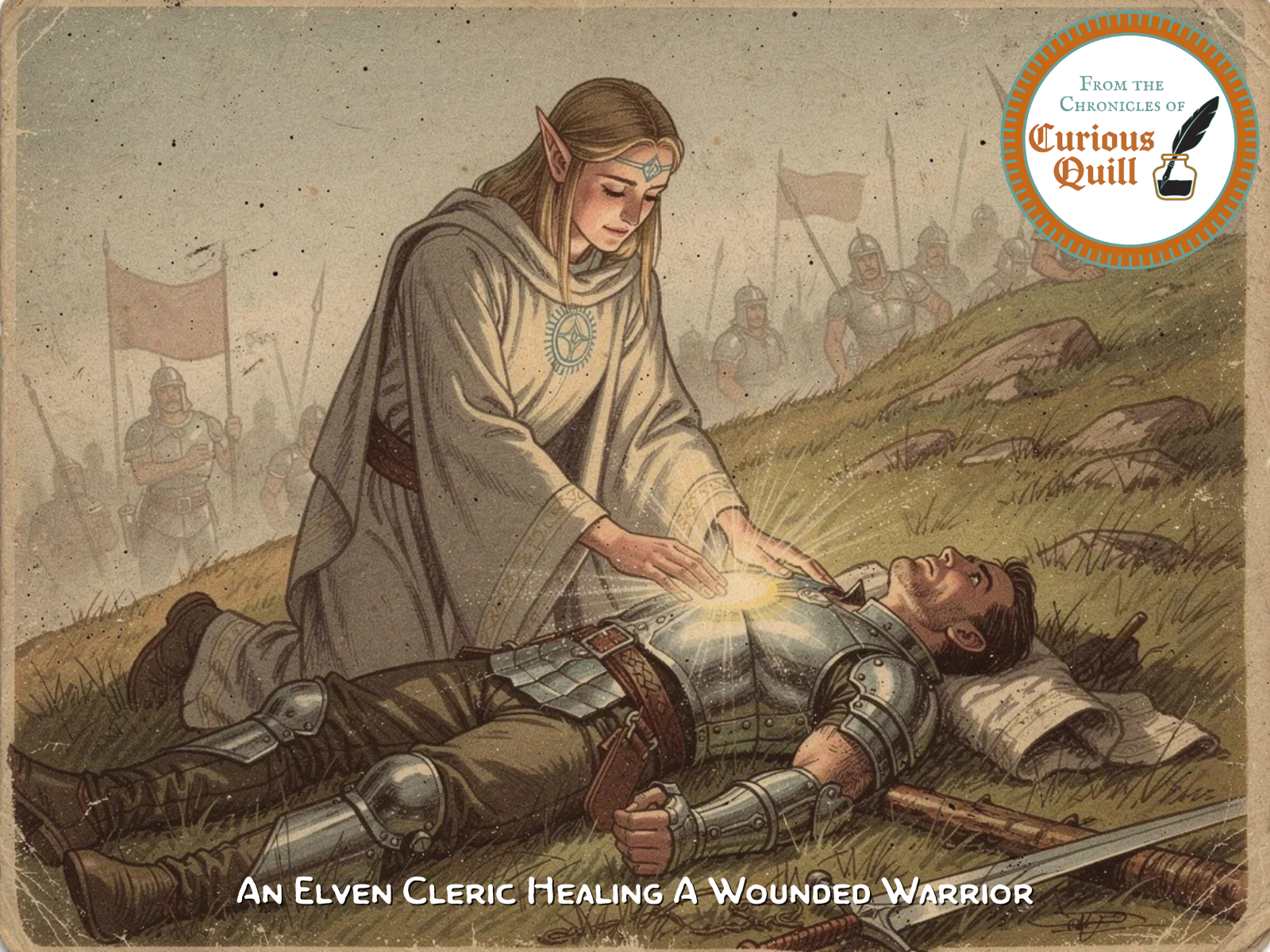
A Cleric wields divine magic, granted by a deity or a pantheon of deities, to fulfill various roles. Traditionally they have been healers—support characters—but they can also deal damage, control the battlefield, and be the face of the party. But it isn't clear what a Cleric is exactly. And how a character might come to be one. For example, what makes them different from a Paladin?
The intro text for the Cleric class: they “can reach out to the divine magic of the Outer Planes and channel it to bolster people and battle foes.” The class description also says that “Not every member of a temple or shrine is a Cleric.” but also that “Harnessing divine magic doesn’t rely on specific training,” so they can be but do not need to be a priest, a member of an organized religion.
Their choice of their Divine Order is a good start: A protector is more likely to be a holy warrior-type while a thaumaturge would lean towards priesthood. But then the protector order further confuses things with the Paladin. Their Domain can also help define the character’s divine origin and source: again a War Domain cleric - paired with the Protector Order makes them even more paladin-like while Life leans towards a lighlty-armored or unarmored healer and Light Domain is more akin to other spellcasters. The Trickery suggest someone who disrupts society.
Devotion Questions
Clerics are representatives of their deity, and they can power in the devotion between the mortal and the divine. In matters of faith, usually it is the mortal having faith in the deity, believing that the deity will provide for them. But, what is interesting to consider for Clerics is that the belief is actually from deity to Cleric. While of course the Cleric believes in and represents the deity, the power they have is because their deity believes in them.
Divine Entity
Perhaps the most important question to answer is which divine enity(ies) they represent. Unlike Paladins who can swear an Oath to something other than a deity, Clerics definitely are connected to one ore more deities. This may be one god or goddess, or a pantheon of multiple deities. It is usually fairly simple for a player to select who the cleric represents, but the choice can come from a variety of options.
Species - is the deity a of their species such as a specifically dwarven or elven deity?
Culture/Community - is the deity specific to their community? This could be someone their nation worships, or more local like the patron of a community or even natural feature.
Tradition - religion is often a familial thing with parents and ancestors passing down the following of a deity because of their personal traditions.
Domain - does the cleric worship and represent the deity because of the domain they represent? Do their morals match up with the principles that the domain espouses?
Gift
The character has abilities and power above and beyond the regular representatives of the deity. Most priests will not have the divine power the Cleric class represents, they cannot channel the divine magic. So why and how were they granted the gift of this power by the deity?
Omen - the cleric was born under auspicious circumstances important to the deity such as under a full moon, on a certain day, when a comet passed, etc.
Reward - the cleric may have performed a deed in support of the deity or its causes that inspired the deity to grant them even more power to accomplish greater things. It could have just been an exceptional display of piety, proving their faith such as meeting a challenge or making a sacrifice.
Pity - the character met with tragedy that was noticed by the deity or other representatives (a Celestial, or even another higher level Cleric) and the deity gave them power to overcome their circumstances.
Because both deal with higher entities granting them power some of these may be similar to those of the Warlock, it is the relationship that is quite different. Clerics are devoted to their deity whereas Warlocks are often adversarial.