Choosing a class typically is more about its capabilities: what will it allow the character to do? What role can it help you fill such as damage dealer, healer, controller, protector, etc. Is it martial or spell-based? And so on. But when building your character, theorycrafting on why the character, versus the player, followed that path can play a large role in creating an interesting back story. Their Background and Species selections can help towards this, and having an idea of the subclass path they will follow can give you the most clarity, but there still can be different reasons for different characters. Some classes are more straightforward, like a Fighter or Cleric, while some are more open-ended like a Paladin or Warlock. In these Class Theory features we will explore and present concepts to help illustrate the reason a character follows a class path.
In this feature we will explore what gives the Ranger their primal powers including spells and other class features.
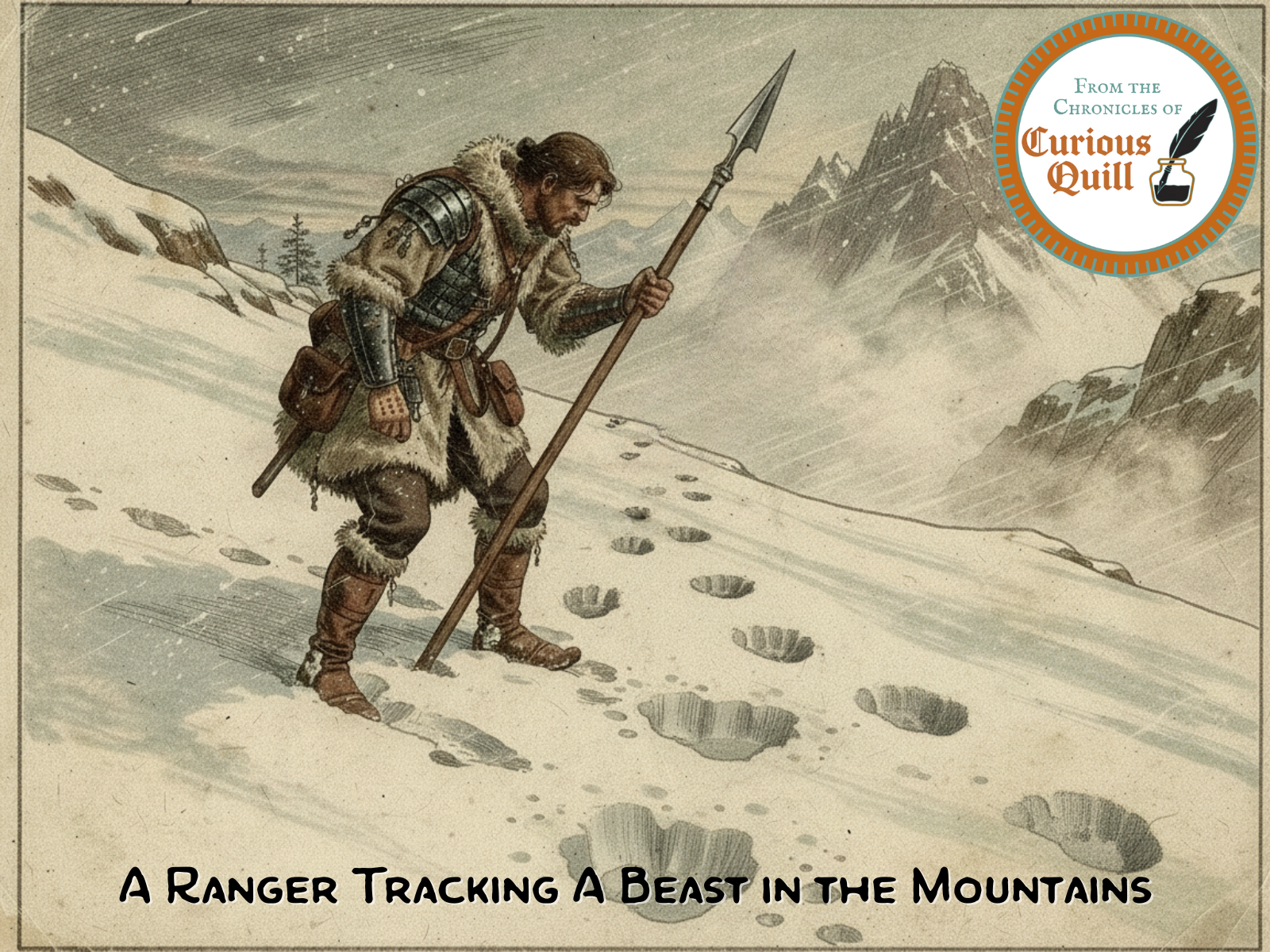
We will continue on ad finish up on the ‘primal’ classes, moving on from Druids and Barbarians to explore the Ranger class. All three share primal powers in their class features either from spells or more innate abilities. In D&D primal relates to the wilderness, and though the word is related to primitive the characters aren’t necessarily. It is a counterpart to arcane and divine magic, and is more elemental and connected to plant and animal life. Traditionally, Rangers were—and often still are—wilderness warriors, and often seen as Hunter's.
Our brief introduction to the Ranger is: they are “honed with deadly focus and harness primal powers to protect the world from the ravages of monsters and tyrants.” As we have asked for other classes, where does their primal power come from? Why did they advance from being a common hunter, tracker, scout or other character in the wilderness?
Hunting for Answers
Rangers are spellcasters, not on the level of full casters like Bards, Clerics, Druids, Sorcerers, Warlocks, and Wizards, but at the same level as Paladins. (there are also ‘third’ casters in sub-classes of classes that don’t normally cast spells like Fighters and Rogues). They have many of the same spells as Druids, but also some unique to them, and they also have class features—usually in their own sub-class—that employ mystical, primal magic. When creating a Ranger character, determining the source of their primal powers can help develop a more robust and interesting background.
Mark of the Wild
A Ranger has a strong connection to the wild things of the world: primal powers including the spirits of beasts or mystical dimensions like the Feywild or Shadowfell.
Happenstance - especially when dealing with the Feywild and Shadowfell, an individual can stumble upon the realm, and once having visited it may develop a permanent connection to its energies and inhabitants. Or maybe they were born at a fortuitous moment connected with primal powers.
Heroism - a Ranger may have performed an act of assistance to a spirit that, in thanks and honor for the character’s aid, grants the individual a connection to their own primal source. This may have been a fey or a primal beast of exceptional power.
History - as with many heroes, a Ranger may have inherited their special characteristics—being in a long line of a family, or at least kinfolk.
Fellowship
Rangers of work on their own, but are as—if not more—likely to be a part of a group of Rangers: part of a fellowship. Of course, whether a loner or part of a group of Rangers, they also like to be surrounded by others that provide expertise that they and other rangers do not have (the adventuring party). Does your Ranger work alone or with other like-minded warriors of the wild?
Lone wolf - the Ranger received their powers of their own accord, and continue to be alone. They do not commiserate with other Rangers as part of an organization.
Pack Creature - it is known that Rangers often band together, in organizations not dissimilar to knightly orders that a Paladin may be part of or other martial unions. These usually have a common interest such as a region they guard, or a type of enemy or prey they all hunt.
Symbiote - Some Rangers may band together in looser partnerships, a camaraderie of similar goals bringing them together temporarily or long-term.