Class Theory: Fighter Concepts
Choosing a class typically is more about its capabilities: what will it allow the character to do? What role can it help you fill such as damage dealer, healer, controller, protector, etc. Is it martial or spell-based? And so on. But when building your character, theorycrafting on why the character, versus the player, followed that path can play a large role in creating an interesting back story. Their Background and Species selections can help towards this, and having an idea of the subclass path they will follow can give you the most clarity, but there still can be different reasons for different characters. Some classes are more straightforward, like a Fighter or Cleric, while some are more open-ended like a Paladin or Warlock. In these Class Theory features we will explore and present concepts to help illustrate the reason a character follows a class path.
In this feature we will explore what separates a leveled Fighter from a common warrior.
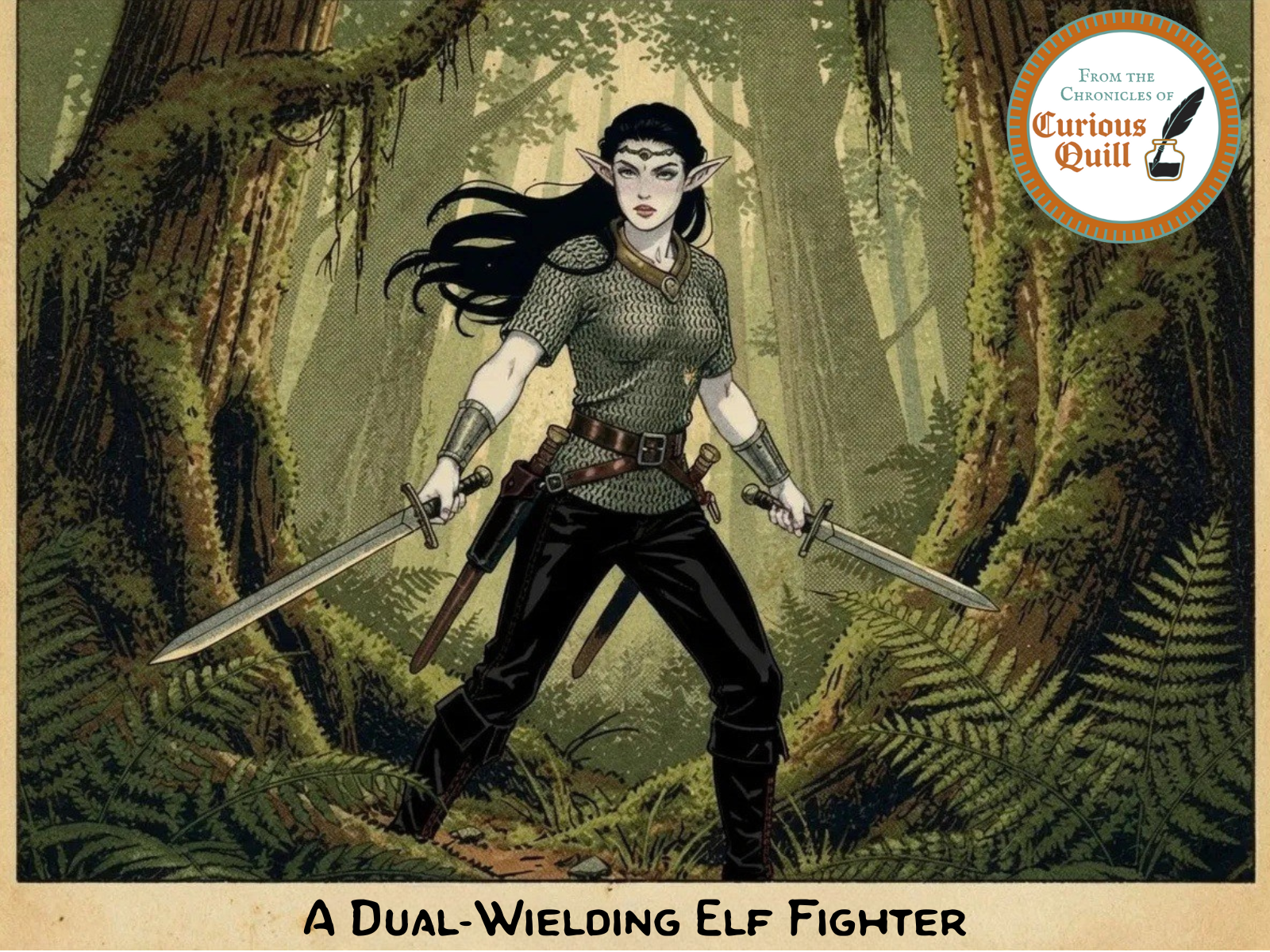
Fighters are a martial class—perhaps the martial class—meaning that they primarily use weapons, which also often means in melee, but can include ranged weapons. Generally they do not use magic (except for a subclass or two). We have already covered some of the other classes considered martial classes (vs. magic or spellcasting focused classes) in the Paladin, and recently the Barbarian and Ranger. While Fighters may seem mundane, even a 1st-level character is well above the abilities of common or even exceptional warriors who aren’t a capital-F Fighter.
The Fighter description explains that they “all share an unparalleled prowess with weapons and armor, and are well acquainted with death, both meting it out and defying it.” So what makes a Fighter character so much more powerful than other warriors? How did they become unparalleled in their martial prowess?
Soldiering Forth
Fighters gain many features that make them rise above their fellow warriors including class features such as Weapon Masteries and Fighting Styles as well as Extra Attack, but also the access to Feats that can further enhance their combat prowess making their weapon attacks nearly equal the might of spells. Most warriors have similar training, and experience and practice can take you to different levels, but the Fighter class still goes above and beyond that. Is it a case of nature vs. nurture, or a combination?
Unique Physique (Nature)
All PCs have have higher ability scores than common-folk (where the average is 8-10 PCs have most stats 12+ up to 17 to start) so just their physical abilities might be seen as the separator.
Ancestry - physical attributes such as height are inherited from parents and those that came before. The characters simply was ‘born this way’ with a head start on others due to their ancestry.
Diet - some people have an advantage in physical health due to a special diet. In a fantasy settings, maybe their region, community or family have access to special food or drink that enhanced the character’s physique. There is a special best, mystical fruit, a sacred pond where they have eaten or drank from.
Favored - they have been favored by a higher entity. Though they may not have gotten magical powers, they have been gifted with prowess and physique well above common folk.
Training (Nurture)
The Fighter received special training either personally or among others, that is not available to the masses. They have been imparted with special knowledge and pushed to extremes of practice and conditioning that have elevated them above other warriors.
Elite Force - within some armies, there are elite squads that are picked from the best of the best and given unique, specialized training to turn them into the most powerful warriors.
Drive - some warriors simply are driven by some motivation to train and achieve special results, often seeking out different fighting styles in order to combine them into abilities others just can’t normally reach.
Survival - often a powerful warrior has just had to survive and adapt to a difficult situation and comes out of it with unique abilities “what doesn’t kill you makes you stronger”. This could be forced into gladiatorial combat, captured by an enemy, left to die in the wilderness, or other ways that a warrior had to prove themselves and learn to outwit or simply outlast their opponents.