Class Theory: Warlock Concepts
Choosing a class typically is more about its capabilities: what will it allow the character to do? What role can it help you fill such as damage dealer, healer, controller, protector, etc. Is it martial or spell-based? And so on. But when building your character, theorycrafting on why the character, versus the player, followed that path can play a large role in creating an interesting back story. Their Background and Species selections can help towards this, and having an idea of the subclass path they will follow can give you the most clarity, but there still can be different reasons for different characters. Some classes are more straightforward, like a Fighter or Cleric, while some are more open-ended like a Paladin or Warlock. In these Class Theory features we will explore and present concepts to help illustrate the reason a character follows a class path.
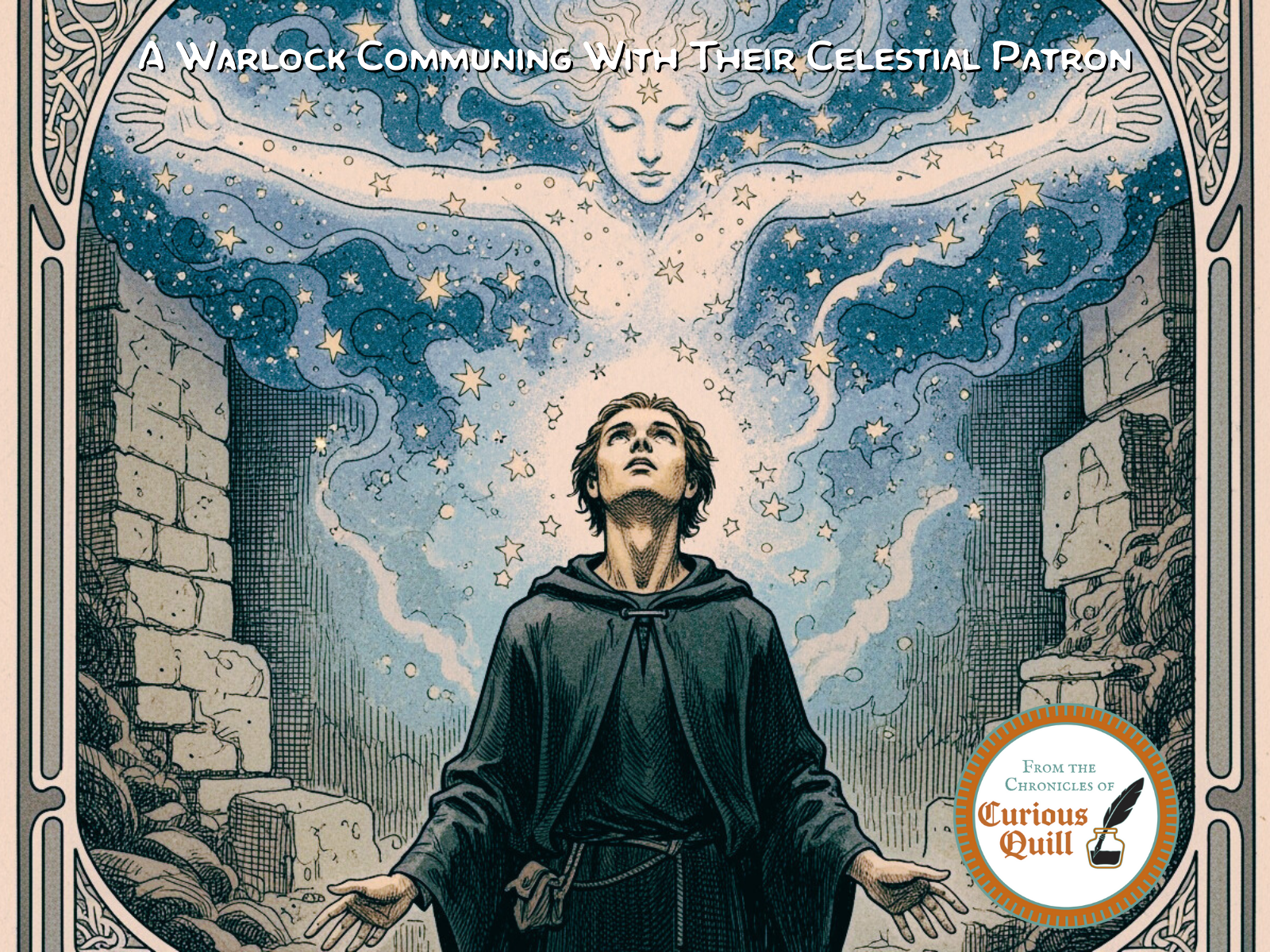
In this feature we will explore why someone might make a pact with an extraplanar being in exchange for the power gained following the Warlock class.
Questions
Warlocks have not only unique class features—different spellcasting than others—but also unique origins of their power. In many—even most—cases the character pursues the path of their chosen class, but for a Warlock their choice may have been made for them. Yes, they make a choice to enter into the pact with their patron, but they are often coerced or tricked into the decision. Knowing what Pact you will make at 3rd level tells you the choice, but not how they got there. The 2024 PH really only gives one example of a path: a quest for knowledge that attracts the extraplanar being. But this is a simplified version of relationships that could and should be more complex. In previous versions there was more of a hint of the coercion that might take place, and looking at literature we can find many examples of characters that make a pact with patrons (like the age-old ‘pact with the Devil’). So how can you give your character a more interesting and robust ‘partnership’? Asking/answering a few questions can help you craft a good reason for your character to bind themselves to their patron and how they continue to work together.
Contact
One question to help you come up with a reason is how the character became entangled with their Patron, how was contact made?
Did the character seek out or discover their patron or was the patron looking for a follower?
Was it Accidental or Purposeful? Did the initiator stumble on their counterpart or did they seek out the patron/subject?
Relationship
So you know how first contact was made, but what type of relationship does the character have with their patron?
Is it Voluntary or Involuntary?
Cooperative or Adversarial?
Expectations
What are the expectations of the two parties? What does the patron expect from their subject? Is it a one-time ask at some later point or is it ongoing action in the interests of the patron?
Examples
Putting the above answers together you can piece together a relationship. Here are some common examples of pact origins and relationships.
Bargain (life-for-a-life) - the warlock agrees to the pact as a bargain, often giving up their life for a life: it could be their own or a loved one. The Warlock or someone they want to help is in danger, possibly on death’s door, and the patron offers them life in service to them afterwards in exchange for the means to cheat death. It doesn’t have to be literally life-saving either, it could be for money, or influence, or something else needed by the character to survive or thrive. This could be accidental or purposeful but is usually voluntary and cooperative.
Empower (fight-fire-with-fire) - especially when crossing alignments, the warlock may seek the power to fight their adversaries and only the power of the patron can help them. This could be a fight-fire-with-fire situation where a fiend gives the warlock power even though they mean to use it to fight evil as the patron knows in the end they hold sway over the warlock to make the final act they want. This relationship is often purposeful and adversarial. It could be cooperative though if they both have the same goal - a celestial or fey patron could empower a follower to fight evil together.
Promote (ambitious intermediary) - the extraplanar being seeks to rise in power, maybe they seek to become equal to God's in power or reach. They expect the warlock to promote their following publicly or work in secret to collect power for them: figuratively or literally. This is usually a purposeful, voluntary and cooperative relationship.