The Magic of the Dwarves and Elves
In the land of Taluma, our setting for Dragonbane and other fantasy rpg games, the dwarves and elves are cousin kin known as the rifafolk. They are both more connected to the uncanny mysteries of the world than humans. In the basic rules of Dragonbane Taluman elves are likely to be Animists or Mentalists while dwarves lean towards Elementalism. With Free League’s Book of Magic coming out in August (and already in some people’s hands—like ours—from their Kickstarter), there are more options that are even more appropriate for the rifafolk of Taluma.
Elementalism
While dwarves are more likely to be elementalists, while elves also pursue animism and mentalism, as people tied to the elements both the rifafolk—including elves—follow this magical path.
As people of earth and fire the dwarves will focus on spells related to that such as the paths of pillar>stone shield/stonewall>gnome and fireball>fireblast>firebird/salamander. Meanwhile the elves as beings of air and water follow one or both of gust of wind>whirlwind>sylp and frost>tidal wave>undine.
Animism
Both the rifafolk honor the spirits present in all of nature including animals and plants and may pursue animism, though elves are more likely to have a stronger affinity while dwarves typically focus on their elements.
Mentalism
Elves are more interested in the stars, augury, and the more intangible magic that mentalism focuses on, though dwarf runeforgers are known to study this path. While elves focus on the divinatory aspects as well as the movement of longstrider and flight—especially among battledancers, dwarf runeforgers weave it into their fighting styles through power fist, stone skin, and enchant weapon.
The Book of Magic
The expanded rules in the new Book of Magic by Free League introduce a wealth of thematic options for the rifafolk. Among the nine new schools, paths like Necromancy (typically reserved for villainous NPCs), Alchemy (a very human pursuit), Witchcraft and Demonology (favored by Nightkin), and Dracomancy (exclusive to dragons) are uncommon for them. Instead, Harmonism, Illusionism, Symbolism, and Enchanting resonate deeply with dwarf and elf traditions.
However, their perspectives differ: many elves pursue the study Illusionism, while dwarves generally disdain it for its lack of tangibility and permanence. When it comes to their specialized professions, the ideal pairings are clear: Harmonism is a natural fit for Battledancers, while Symbolism perfectly complements Runeforgers.
Elves & Harmonism
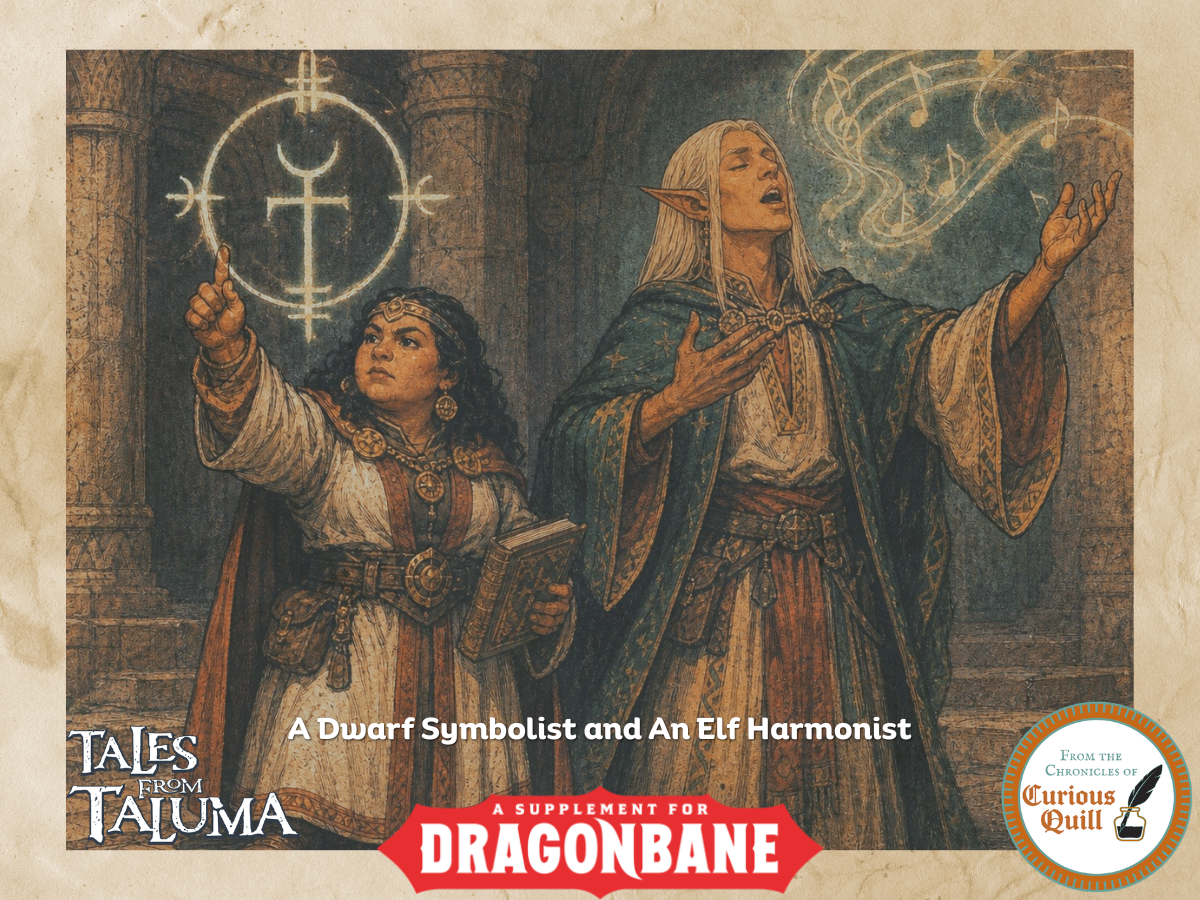
As stated above, harmonism is a perfect school of magic for elves, Battledancers especially, but any elf. It uses Performance as its skill to cast. Elves do not need to make audible music as most harmonists do: they can also dance and their movement and its rhythm evokes the spells without sound needed.
Dwarves & Symbolism
Symbolism is the primary school taught to runeforgers, followed by mentalism. The forms practiced by runeforgers allow the dwarf to make the shape of the symbol for the spells through their body when they form the pose associated with it. Dwarf runeforgers can use Crafting to cast symbolism spells rather than needing a devoted Secondary Skill to the school.
Enchanting
While this school may be looked down on by other mages, both dwarves and elves pride themselves on the crafts of their people and their ability to instill magic into them by their very connection to the elements and associated crafts. Both dwarves and elves can use the Crafting skill instead of a separate ‘Enchanting’ secondary skill to cast
Even the most seemingly mundane items crafted by rifafolk may contain a magic trick or even rank 1 spell (perhaps when a dragon is rolled when crafting it). Dwarven smithing and stonecutting and elven ceramics and gem cutting are their specialties and they excel at crafting regular and magical items in those handicrafts.