Director’s Cuts: Looming Threats
Behind the screen, a Gamemaster is a director shaping pacing, tension, and drama. In the Director’s Cuts column we pull back the curtain on tabletop storytelling. Every installment delivers actionable, system-agnostic strategies to elevate your game. In this installment, we look at using impending events we call Looming Threats.
Passivity kills game pacing. When your players treat a dangerous dungeon like a leisurely museum tour, the tension completely evaporates. The easiest way to fix player analysis-paralysis is to light a fire under them with a visible countdown: the Looming Threat.
Taking a queue from the Dragonbane solo adventuring rules with their Mission Threat example, we can use a similar method in any adventure, in any system or setting. These should be planned events by the Gamemaster, not ‘random encounters’ (we have our opinions on using those that may just come up in a future column). Based on the setting: dungeon, castle, forest, road; and the existing denizens: citizens, guards, monsters, etc.; you should come up with an event that will happen
To track this, place a die of your choice on the table facing the highest number on it. A d6 is recommended but you can hasten it with a d4 or give them more time by going up to a d8 or higher—this can partly depend on the size of the setting and the time you have to play for the session. Every time the players delay, the timer ticks down.
What Moves the Clock?
Time is a resource, and waste costs them. Tick the die down by one digit whenever the players:
Argue or stall: Debating a door puzzle for ten real-time minutes? Taking a rest? Tick.
Fail rolls: Flubbing a lockpick attempt means a noisy, time-consuming retry. Tick.
Over-search: Spending hours tearing apart every single room for loot. Tick.
In Dragonbane, every Stretch will automatically Tick the timer down one. In other games this is every room, every rest, every battle—equivalent to about 15 minutes of game time.
Hitting Snooze
There can be ways that the clock can be paused or even stopped. Obviously keeping moving and finishing the adventure before the clock hits zero will defeat it, but you can provide other ways that the players can do so. Allow them in their creativity to come up with things that will delay or stop it.
Delaying the Timer
Delaying a threat doesn't solve the problem, but it resets the tension and gives players a momentary breather. Think of this as adding ticks back to the clock or pausing the countdown.
Targeting Infrastructure: The players don't destroy the threat itself; they disable a critical component required for it to function. Without this component, the process stalls while a replacement is secured.
Resource Sacrifices: Force a difficult trade-off. To slow the countdown, the players must expend a significant asset—be it wealth, equipment, territory, or social capital—to create a temporary buffer.
Interference and Disruption: Players attack the threat's support systems. This can involve cutting off its supply lines, removing key subordinates, or feeding it false information to redirect its energy away from the objective.
Containment Measures: The party builds a temporary barrier or implements a quarantine. This doesn't neutralize the danger, but it traps or restricts the threat to a specific area for a limited duration.
Stopping the Timer Entirely
Stopping a threat altogether requires a definitive, high-stakes resolution. This is where the players move from reactive survival to proactive triumph, permanently shattering the clock.
Neutralizing the Core Anchor: Every threat should rely on a central hub, leader, or power source. Eliminating this primary catalyst immediately causes the entire threat structure to collapse.
Bypassing the Stakes: Instead of stopping the threat, the players make its success irrelevant. They alter the environment or evacuate the target, ensuring that when the countdown hits zero, there is nothing left for the threat to impact.
Deploying the Counter-Measure: The players use the time they bought to acquire a specific tool, weapon, or piece of leverage. Once deployed, this counter-measure completely neutralizes the threat's power.
Turning the Threat Inward: Clever players manipulate the threat into destroying itself or colliding with a rival danger, effectively forcing two opposing problems to cancel each other out.
Why It Works
When the die hits zero, the looming threat materializes. Suddenly, every decision matters. Your players will start looking at that die and asking themselves: Do we risk spending time searching this chest, or do we keep moving before the threat happens? It turns boring exploration into a high-stakes race.
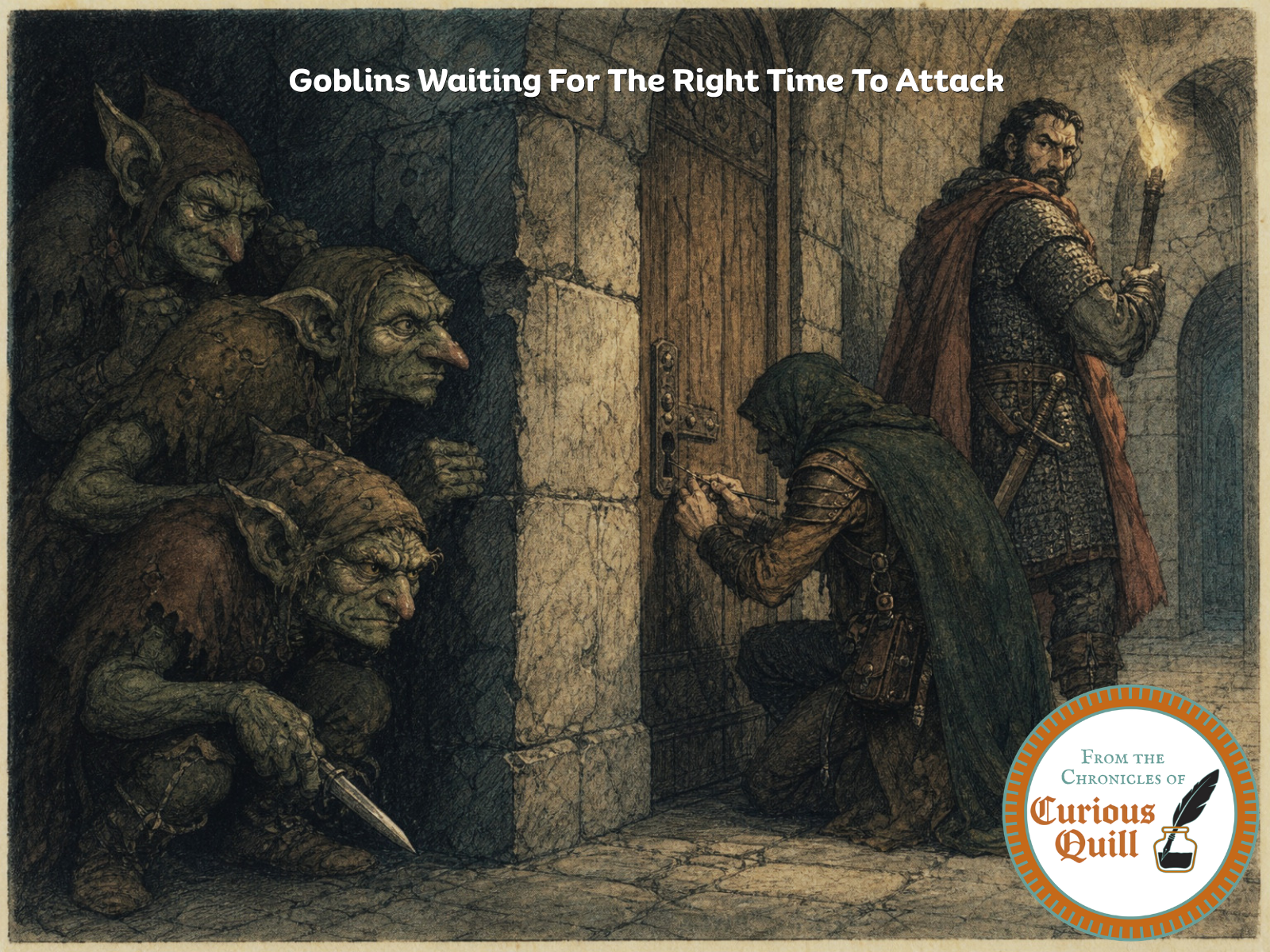
Example: The Skulking Pack
Instead of a vague timeline, give them an active danger. Imagine a pack of stealthy goblins tracking the party through a dungeon. They are hiding in the shadows, waiting for the perfect moment to strike.
Delays
Barricading Doors: Spiking a door shut or wedging heavy furniture against it forces the goblins to spend time bypassing the obstacle. This ticks the timer back up by 1 or 2 points.
Leaving Distractions: Dropping a trail of rations, gold coins, or shiny objects behind can cause the greedy goblins to stop and bicker, buying the party precious time.
Covering Tracks: Successful survival or stealth checks to mask their scent, wipe away footprints, or move through water can throw the goblins off the trail, freezing the countdown for several rooms. Casting a Silence or other spell of subterfuge for the stretch so you are undetected.
Stopping the Clock
Setting an Ambush: Instead of waiting to be hunted, players can actively turn the tables. If they hide and successfully surprise the stalking goblins, they break the countdown loop and force an immediate, advantageous combat.
Laying Traps: Setting hunting traps, Caltrops, or magical hazards (like Alarm or Snare) in a choked hallway can permanently maim or scare off the scouts, forcing the pack to retreat.
Eliminating the Leader: If the players manage to snipe or take out the chief scout or the goblin tracking beast, the remaining goblins lose their nerve and scatter back into the dark.
More Examples
Here are some more examples beyond the goblin (or other humanoid or monster) threat above. For each you can determine ways its timer can be delayed or stopped.
Catastrophic Failures
Rising Water: A broken pipe or tidal trap slowly floods the lower levels.
Structural Collapse: Exploding gas pockets or unstable architecture causes cave-ins room by room.
Ritual Completion: A cult's chanting grows louder, ending in a massive demonic summoning.
Environmental Disasters
Spreading Fire: A knocked-over torch sets the dry wooden structure or forest ablaze.
Suffocation: The dungeon's air supply is cut off, giving the party limited breathing time.
Volcanic Eruption: Lava breaches the lower chambers, sealing off escape routes one by one.
Dynamic Out-of-Turn Patrols
The Apex Predator: A blind but highly sensitive monster hunts by sound, closing in on noisy players.
Castle Guard Sweep: A formal military unit conducts periodic, systematic sweeps of the corridors.
Rival Adventurers: A cutthroat competitor party is ahead of the players, snatching up loot if they stall.