Class Theory: Rogue Concepts
Choosing a class typically is more about its capabilities: what will it allow the character to do? What role can it help you fill such as damage dealer, healer, controller, protector, etc. Is it martial or spell-based? And so on. But when building your character, theorycrafting on why the character, versus the player, followed that path can play a large role in creating an interesting back story. Their Background and Species selections can help towards this, and having an idea of the subclass path they will follow can give you the most clarity, but there still can be different reasons for different characters. Some classes are more straightforward, like a Fighter or Cleric, while some are more open-ended like a Paladin or Warlock. In these Class Theory features we will explore and present concepts to help illustrate the reason a character follows a class path.
In this feature we will explore what separates a Rogue class character from a common thief or other skilled and stealthy individual.
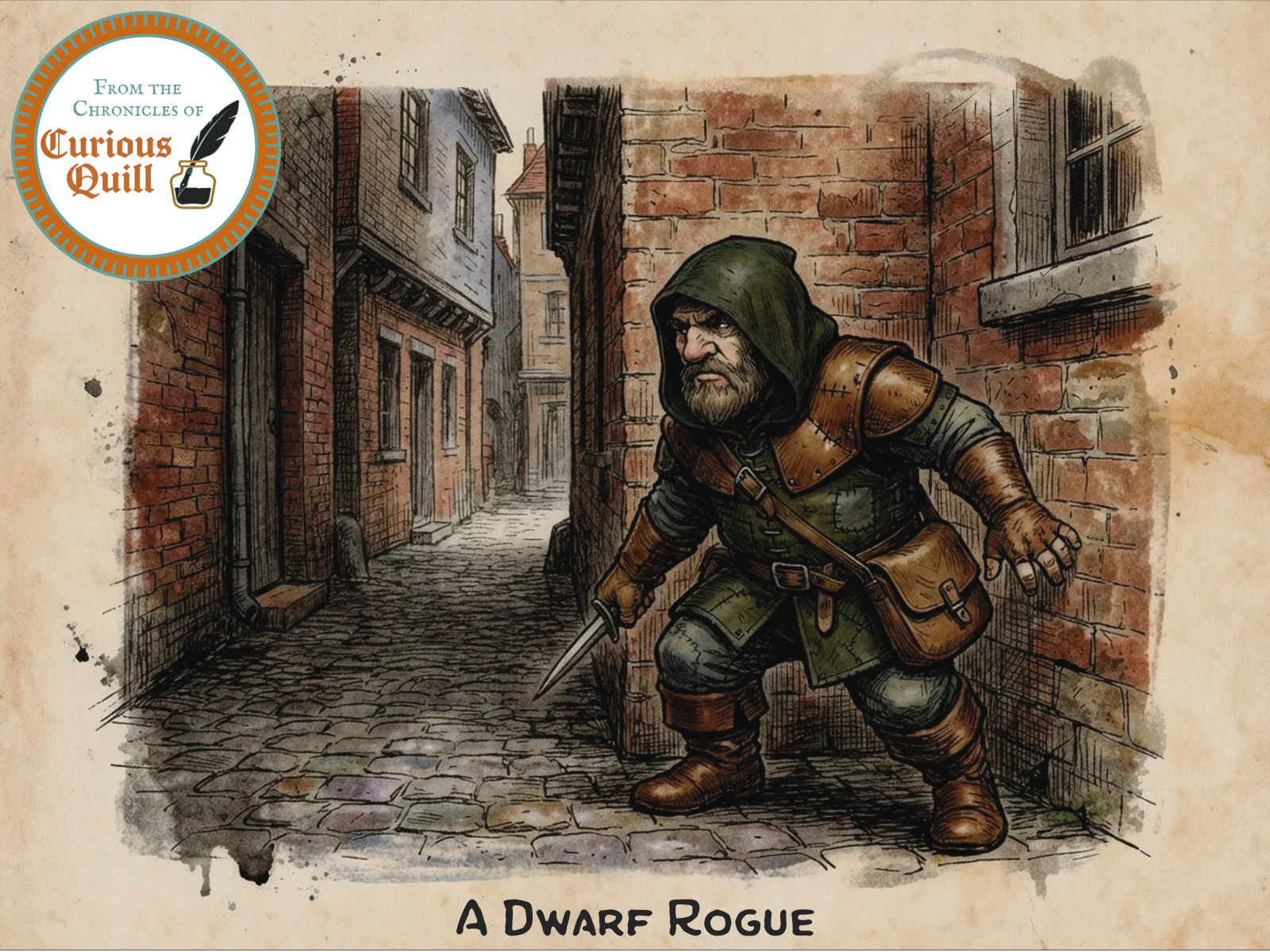
Rogues are the last of the three (primarily) martial classes along with Barbarians and Fighters. Like them they do have subclass(es) that can give access to mystical—even outright magical (spellcasting)—powers. But their base class features and most subclasses eschew magic for mundane abilities. Rogues enhance their attacks with extra damage from exploiting drops in their opponents’ defenses (Sneak Attack—which IMHO could use a name change since it doesn’t require stealth). They also have a broad range of skills that allow them to do many different things well, and Expertise in some that push their proficiency beyond levels others can achieve.
According to the PHB, Rogues “have a knack for finding the solution to just about any problem, priorotizing subtle strikes over brute strength.” Where does a Rogue character get this special knack that other everyday scoundrels, scouts and sleuths lack to make them a leveled character? What gives them the insight to take advantage of weaknesses and excel at skills?
From the Shadows
While Stealth, the proficiency and strategy, isn’t as important to Rogues anymore—with the requirement for Sneak Attack only being Advantage and not a surprise/stealthed attack—it still is a part of the fantasy of the class and where its strongest roots are. While they have evolved to being about subtlety and skill versus outright subterfuge, most of the paths for a rogue to enhance their prowess, their subclasses, involve operating from the shadows.
Sly as a Fox
Rogues get the most initial Proficiencies of any class (1 more than Bards, 2 more than most other classes) and get Expertise initially in 2 and eventually 4 total Proficiencies. Their class is the most cunning and skilled of them all. How were they able to pick up this level of cunning, double that of even other adventurers?
Dedication - rogues may not seem to be studious like a Wizard or Bard, or practiced in combat like Fighters, but something caused them to dedicate themselves to the study and practice of their craft (think: a certain Mr. Wayne).
Desperation - out of sheered survival, the character learned more than those around them. Forced into a difficult situation they escaped and “what kills you makes you stronger” they emerged with exceptional talent.
Prodigy - the character was just born this way. They are exceptionally skilled in their areas of Expertise. Their prowess could be mental, physical, or social.
Deadly Aims
Rogues can bring a lot to the party outside of combat with their breadth of expertise, but their primary ability especially related to combat is their Sneak Attack feature which allows them to do more damage in an advantageous strike. Think about where they learned this special skill that ordinary blackguards lack.
Umbrage - the character is Shadow-touched. They have been marked by the dark energies of the Shadowfell or even darker realms that give them a sens for death.
Shadow Organization - their ability to work in the shadows came from being part of an organization that is as shadowy—probably more—than they are: a secret society or service, a clan, a guild, etc.
Analytical - the character can see and process things quicker than others, allowing them to analyze opponents and predict their movements to ‘see’ when there will be an opening for their attack.