Class Theory: Bard Concepts
Choosing a class typically is more about its capabilities: what will it allow the character to do? What role can it help you fill such as damage dealer, healer, controller, protector, etc. Is it martial or spell-based? And so on. But when building your character, theorycrafting on why the character, versus the player, followed that path can play a large role in creating an interesting back story. Their Background and Species selections can help towards this, and having an idea of the subclass path they will follow can give you the most clarity, but there still can be different reasons for different characters. Some classes are more straightforward, like a Fighter or Cleric, while some are more open-ended like a Paladin or Warlock. In these Class Theory features we will explore and present concepts to help illustrate the reason a character follows a class path.
In this feature we will explore how Bards are more than just musicians or entertainers, able to create magic from their art.
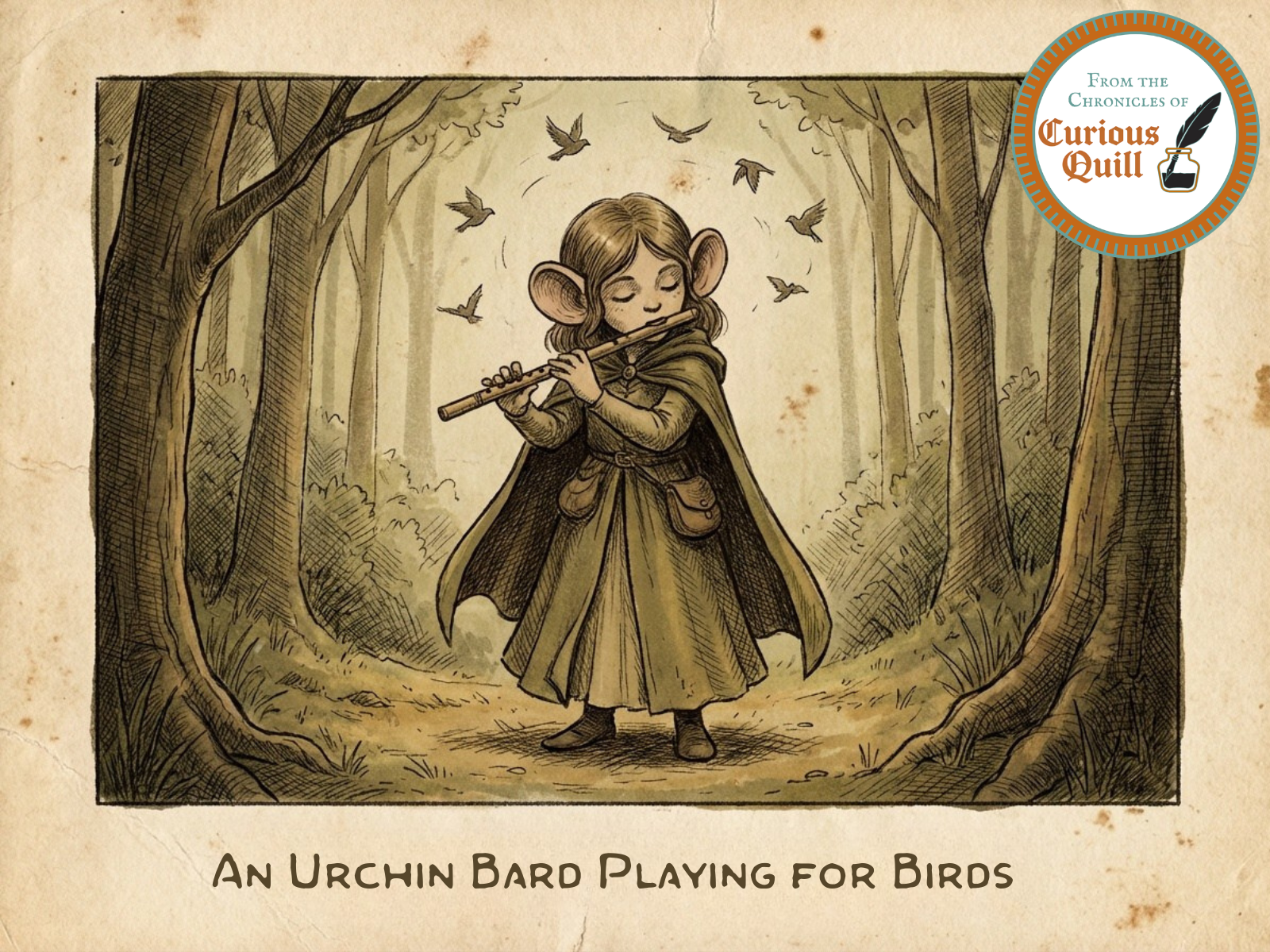
And here we are, at the last of the 5e character class origin features. Our last chance to explore how a common individual ends up with the power that give them abilities above and beyond those of the majority of people. In the Bard, we will explore how an everyday entertainer gets the ability to invoke magic through creative arts.
How does a Bard become an expert at “inspiring others, soothing hurts, disheartening foes, and creating illusions.”? Where do they learn that words and music are the very foundation of all else and thus by knowing the right words and notes they can influence people and the very world around them?
Take Notes
The traditional concept of the Bard is as an entertainer—especially a musician o singer—but they artistic inspiration for themselves and others may come from words and actions. They may regale with a legendary or folk tale, perform a dance, or recite a poem. But what makes their art form become a magical art?
The Art of All Arts
At some point the Bard learns to call upon the words and musical notes that formed the very universe. Though the languages and songs of mortals would come much later, the gods—perhaps even a primordial source before them—had their own lexicon. It is these words and songs that Wizard and Bards study similarly, trying to find and understand—and eventually themselves use—these sounds to create magic. Wizards look at it more from a scientific viewpoint while Bards explore the art in it.
Guide - A Bard may come upon a being that will tutor them on these mysteries. This could be another Bard who takes them under their wing, or it could be a fey creature, or some other extraplanar being with the personal knowledge like a sphinx or unicorn.
Revelation - Sometimes by accident a mortal can have the mysteries of the primordial language exposed to them. They may overhear it purposefully or accidentally and gain the insight.
Discovery - Bards are known to extensively research and practice their art. It is rare, but a Bard may simply have put in the work and again—accidentally or purposefully—found a source that gives them the knowledge. They find an ancient text, weave together multiple sources to find a common thread, or just happen upon a hidden codex.
Keep Feeling Fascination
Each Bard specializes in one art form that they use to inspire others. They are able to fascinate others to inspire or even control or terrify others. Each Bard may learn a different way to manifest these mysteries.
Tone - the Bard’s voice, or their skill with an instrument to evoke a tone from it, are unique and evoke the magic. They can speak or sing with an uncanny voice or they are able to play notes between the notes that only they know.
Pattern - it isn’t the specific words or notes, but the weaving together of them: the pattern that is followed or created is the source of their magic.