Class Theory: Wizard Concepts
Choosing a class typically is more about its capabilities: what will it allow the character to do? What role can it help you fill such as damage dealer, healer, controller, protector, etc. Is it martial or spell-based? And so on. But when building your character, theorycrafting on why the character, versus the player, followed that path can play a large role in creating an interesting back story. Their Background and Species selections can help towards this, and having an idea of the subclass path they will follow can give you the most clarity, but there still can be different reasons for different characters. Some classes are more straightforward, like a Fighter or Cleric, while some are more open-ended like a Paladin or Warlock. In these Class Theory features we will explore and present concepts to help illustrate the reason a character follows a class path.
In this feature we will explore where Wizards might learn their craft: arcane spellcasting.
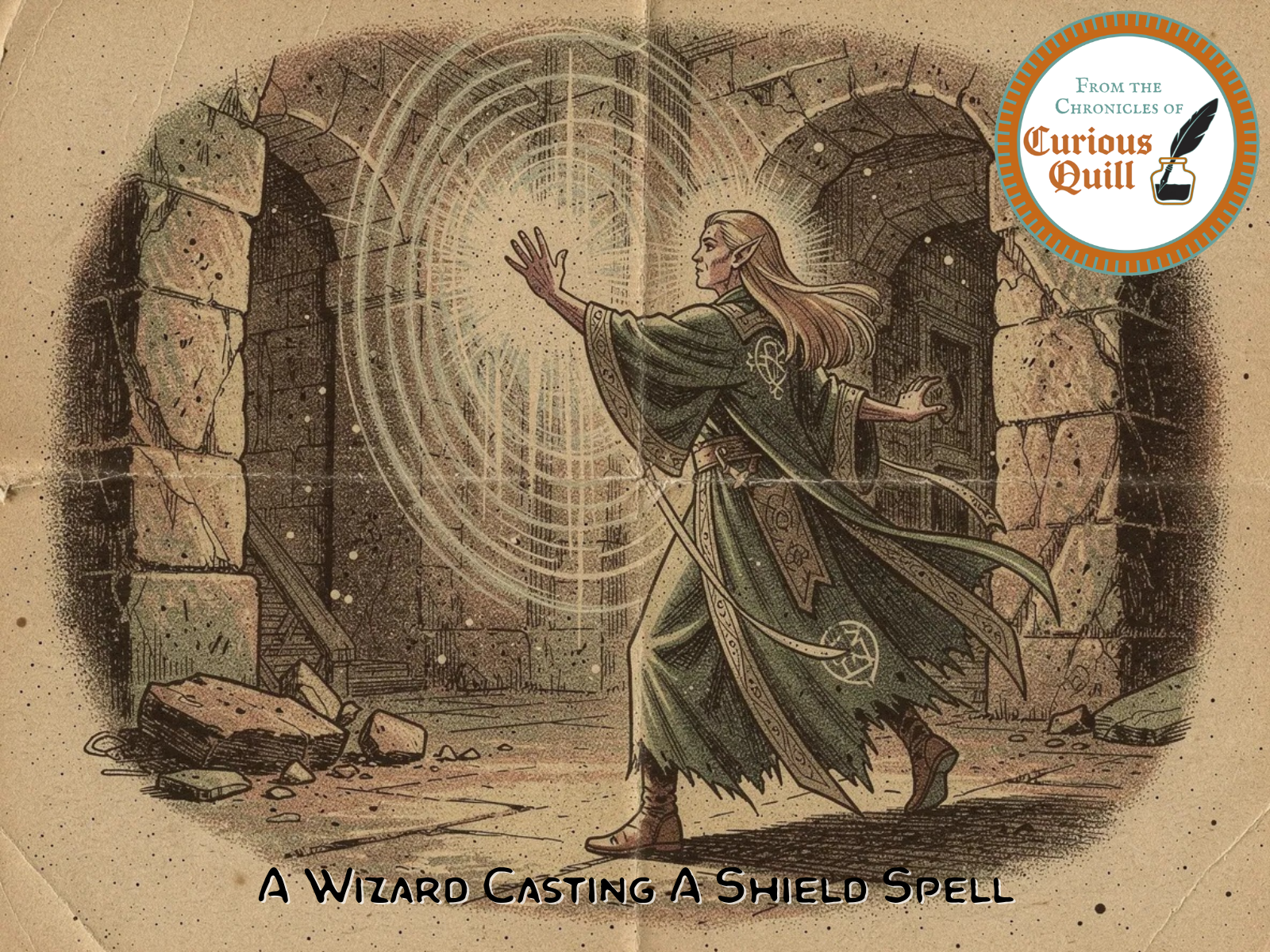
We are down to the penultimate class to cover, and we wrap things up with the two most versatile spellcasters: starting with Wizards. Wizards, along with Bards, are the two arcane magic-focused classes. Wizards do have many elemental spells (like their most well-known fireball and other like lightning bolt) which they share with primal casters, but they also branch our into more broadly magical spells including those of illusion and transformation.
The intro to Wizards says that they “cast spells of explosive fire, arcing lightning, subtle deception, and spectacular transformations.”. And right here we see their versatility. The difference between a Wizard and a Sorcerer or Warlock is that their spells come from study: from books, and scrolls. Their methods revolve around understanding the threads of magic and weaving them through phrases and gestures to conjure mighty power. While many study magical theory, it is only a small number that can actually use that knowledge to evoke arcane power into practical effects and become a Wizard. What is it about these people that makes them a true WIzard?
Road Scholars
Wizards are generally a bookish type, holed up in libraries, universities, towers and other places where they can pursue their studies. Many students of the arcane trap themselves in isolation, stuck in their places of learning and study. They may learn to cast spells instead of just understanding it, but study can only take you so far. Eventually even those who want to expand their power learn that they must take their talents out into the world, take them on the road as it were, as only practical experience can hone their talents into the most powerful of magics.
Class is in Session
Wizards must learn their craft from somewhere. The spells they cast require words and instructions and are passed down via books and scrolls. It is very rare for a Wizard to learn to cast spells simply through training. The written works, spellbooks and scrolls, are gathered in places where they can be studied.
Library - There are many libraries that have sections, even entire wings, for writing of the arcane arts. While anyone can read them, they may have special groups within them that meet and practice magic.
School - Schools, for various ages, exist solely to teach magical arts. Private schools for children and teenagers exist to give a head start, and they may continue on to academies and universities. Some don’t start their education until later and start at the university level.
Societies - Societies or orders of Wizards, often secret societies, are independent arcane-focused organizations dedicated to the arcane arts. Often stereotyped as wizard towers, they may be visible or hidden special establishments requiring membership.
Get Up, Get Outta Here, Gone…
A wizard’s drive and curiosity, but especially their desire for power, will lead them to eventually leave the protection and constraints of the source of their education. One can only truly become a Wizard proper if they go out into the world and experience and expand their horizons and reach. What is their motivation to leave the safety of their classrooms?
Curiosity - many Wizards simply become curious about what lies beyond the walls of their place of study.
Ambition - it is well-known that Wizards can be an ambitious people, with the power the wield they realize that they can use that power over, or for, others and must flex their magical muscles.
Mandate - a Wizard might be forced into experiencing the world: their own organization might send them out, a leader might command them to help their people, or an accident or curse might force them to go find answers they can’t find in their classrooms.